

Few wildlife experiences carry the emotional weight of meeting a mountain gorilla. Rwanda has made this encounter accessible in a way that protects the animals, supports communities and rewards visitors with an hour they rarely forget. The mountain gorillas in Rwanda live in Volcanoes National Park, in the misty Virunga mountains of the northwest, a few hours’ drive from the capital, Kigali.
This guide explains who these gorillas are, how Rwanda protects them, how trekking works, what it costs and how to plan a visit.
Meet the Mountain Gorilla
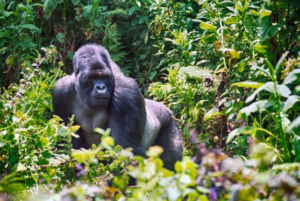
Mountain gorillas are a subspecies of the eastern gorilla. They have thick, dark fur suited to cold, high-altitude forests, broad chests and powerful arms. Adult males, called silverbacks, develop a silver-grey saddle across the back and can weigh well over 150 kilograms. Females and young are smaller, and infants are famously playful.
Gorillas live in family groups led by a dominant silverback who makes decisions about travel, feeding and protection. Groups vary in size, and one conservation source notes that family groups average around 10 members, although some can have as many as 40 individuals. They are largely vegetarian, feeding on leaves, stems, shoots and bamboo, and they build fresh nests each night.
Female gorillas give birth only every several years, which makes population recovery slow. One source notes that female gorillas give birth after 4 to 5 years, with a gestation period of 8 to 9 months. This slow reproductive rate is one reason protection matters so much.
Where Rwanda’s Gorillas Live
Rwanda’s gorillas live in Volcanoes National Park, which covers roughly 160 square kilometres of rainforest, bamboo and volcanic slopes. It borders Virunga National Park in the Democratic Republic of Congo and Mgahinga Gorilla National Park in Uganda, forming part of a shared transboundary conservation area known as the Virunga Massif. Gorillas can move across these borders, so protection depends on cooperation between the three countries.
The population here is a conservation success story. Estimates have changed over time as surveys have improved. One source places the Virunga Massif population at more than 604 individuals, reflecting years of collaboration among conservationists, rangers, researchers, communities and the Rwandan government. For context, an older figure from the same region put the Virunga population at about 480, so the numbers show clear growth. Approximately 459 more gorillas live in Uganda’s Bwindi Impenetrable National Park, giving the global mountain gorilla total of just over a thousand.
Gorilla Families You Can Visit
Volcanoes National Park has a number of fully habituated families open to tourists. Different sources give slightly different counts because families split, merge and rotate. One park-based source says twelve gorilla families live in the park that are fully habituated, with a few others habituated solely for scientific research. Family names you may hear include Susa, Sabyinyo, Agashya, Amahoro, Kwitonda, Karisimbi, Hirwa, Umubano, Muhoza, Isimbi, Kwisanga and Igisha, although the exact list and sizes shift over time.
Each group has its own character. Susa is historically famous for its size and its place in early research, Sabyinyo is known for its large silverback, and Karisimbi lives high on the slopes of the mountain of the same name, which means a longer hike. One article notes that the Rwanda Development Board occasionally rotates access to newly habituated groups to give older families time to rest from tourism exposure. This rotation shows how seriously the authorities treat the animals’ welfare.
Your family is typically assigned on the morning of the trek. Operators can request preferences, such as an easier or harder hike, but allocation is made by the park.
How Gorilla Trekking Works
Permits. Visitors must hold a permit, which is limited in number each day. A 2026 comparison reports that Rwanda issues about 96 daily permits across its 12 habituated families. Groups are limited to eight visitors per family, and the minimum age is 15.
Briefing. You arrive at the park headquarters at Kinigi early in the morning. Rangers brief you on rules, assign your group and introduce your guides.
The trek. Trackers locate the family from the previous day’s trail. Hikes can range from about 30 minutes to 4 hours, through bamboo, farmland edges and forest, over steep and often muddy terrain at altitude.
The encounter. Once you reach the gorillas, you leave extra gear with your porter and approach quietly. You spend one hour observing the family as they feed, groom, rest and play. Silverbacks may display calm authority, juveniles may tumble and infants may cling to their mothers.
The return. After the hour ends, you hike back to the trailhead, where many parks present certificates and celebrate with traditional dance or refreshments.
Cost of Gorilla Trekking in Rwanda
The permit is the primary expense. A Rwanda gorilla permit costs USD 1,500 per person, set by the Rwanda Development Board, and the price is reported to hold steady for 2026/2027. Rwanda also offers lower rates for residents and East African citizens, so check eligibility with the Rwanda Development Board.
Beyond the permit, plan for accommodation, transport, meals, porters and tips. One 2026 source lists mid-range lodges at $300 to $600 per night on full board, and luxury lodges at $1,200 to $3,500 or more per night. Overall costs depend heavily on lodge choice, transport and group size, so request an itemised quote. Because gorilla trekking rules and prices can change between tariff periods, always confirm current rates before booking.
Why Rwanda’s Model Works: Conservation and Community
Rwanda’s approach rests on high-value, low-volume tourism. Limited permits protect gorillas from overexposure, while the high price generates revenue for park management, anti-poaching patrols, veterinary care and community projects. A share of tourism revenue is directed to communities living near the park, funding schools, clinics, water projects and housing.
Kwita Izina. Every year, Rwanda holds the Kwita Izina naming ceremony, which gives names to baby gorillas born in the previous year, modelled on the traditional Rwandan practice of naming a child. As the organisers explain, the phrase means “to give a name” in Kinyarwanda, and the ceremony has become a global celebration of conservation. One report notes that since 2005, Kwita Izina has named 438 baby mountain gorillas. The 21st ceremony took place in September 2026, where officials emphasised that conservation and community development must advance together.
Habitat expansion. As the population grows, gorillas need more space. Rwanda has announced plans to extend Volcanoes National Park by nearly 25 per cent to secure a safe future for the next generation, alongside community resettlement and housing projects. The expansion shows both the success of conservation and its new challenges.
Best Time to Visit
Gorillas can be trekked all year, but conditions differ.
- Dry seasons (June to September and December to February): Trails are firmer and easier, and visibility is better. These are also the busiest months, so book permits and lodges well ahead.
- Wet seasons (March to May and October to November): Trails are muddier, but forests are lush and crowds thinner.
Because trek length depends on where the gorillas move rather than on the season, you should be prepared for any level of effort.
Preparing for Your Trek
- Fitness: Build stamina with hill walking and stair climbing before you travel.
- Footwear and clothing: Wear sturdy, broken-in hiking boots, long trousers, a long-sleeved top, a waterproof jacket and gardening gloves.
- Porters: Hire one, since they carry your gear, assist on steep sections and earn valuable income.
- Camera: Bring a camera that performs well in low light. Flash is not allowed.
- Health: Consult a travel clinic about vaccines and malaria prevention, and carry insurance that covers medical evacuation.
Gorilla Etiquette
Rules protect the animals and the visitors:
- Keep about seven metres’ distance unless the gorillas approach.
- Do not trek if you are ill, because gorillas are vulnerable to human diseases.
- Keep your voice low and avoid sudden movements.
- Do not eat, drink or smoke near the animals.
- No flash photography.
- If a gorilla approaches, stay calm, avoid direct eye contact and follow your guide’s instructions.
Conclusion
Mountain gorillas in Rwanda represent one of the world’s most hopeful conservation stories. Their numbers are growing, their habitat is being expanded and communities are sharing in the benefits of protecting them. For visitors, the reward is an hour in the presence of one of our closest relatives, in one of Africa’s most beautiful landscapes. The experience is demanding and expensive, but it is also deeply meaningful, and your permit contributes directly to the animals’ survival. Book early, prepare physically, follow the rules and travel with respect. Do so, and you will leave with more than photographs: you will leave understanding why these animals are worth protecting.
Key Takeaways
- Rwanda’s mountain gorillas live in Volcanoes National Park, part of the wider Virunga Massif.
- The park has around a dozen habituated families open to visitors, with groups limited to eight people.
- A permit costs $1,500 per person for foreign non-residents. Verify current tariffs.
- The standard encounter lasts one hour, and the minimum age is 15.
- Kwita Izina, the annual gorilla naming ceremony, celebrates conservation and community partnership.
- Rwanda plans to expand Volcanoes National Park by nearly 25 per cent for the growing population.
- Prepare physically, hire a porter and follow all health and etiquette rules.
Frequently Asked Questions
- Where can I see mountain gorillas in Rwanda?
In Volcanoes National Park, about three hours by road from Kigali. - How much is a gorilla permit in Rwanda?
$1,500 per person for foreign non-residents. Check the Rwanda Development Board for current rates and categories. - How long do I spend with the gorillas?
One hour once you reach the family. - How many gorilla families can I visit?
Around twelve fully habituated families are available, although the number and names can change. - How hard is the trek?
It ranges from about 30 minutes to several hours of hiking, depending on the family’s location. Moderate fitness and a porter help. - How many people can visit each family?
A maximum of eight visitors per family per day. - What is the minimum age?
15 years. - What is Kwita Izina?
It is Rwanda’s annual ceremony to name newborn gorillas, celebrating conservation and community involvement. - When is the best time to go?
June to September and December to February are the main dry seasons. Gorillas can be visited all year. - Are mountain gorillas still endangered?
Their status has improved thanks to conservation, but they remain vulnerable, with a small population and a slow reproductive rate. Continued protection is essential.