

The question of when to climb Mount Kilimanjaro carries consequences extending far beyond simple weather forecasting. Your timing choice influences everything from the likelihood of reaching Uhuru Peak to the depth of your experience, the weight of your wallet, and the nature of memories you’ll carry for life. While conventional wisdom points to “dry seasons,” the reality proves far more nuanced—what constitutes the best time to climb Kilimanjaro for one adventurer may represent the worst choice for another. This comprehensive guide moves beyond generic seasonal advice to provide sophisticated analysis of Kilimanjaro’s temporal landscape, empowering you to select timing that transforms your specific circumstances, capabilities, and aspirations into optimal climbing conditions and unforgettable achievement.
Understanding Kilimanjaro’s Temporal Personality
Mount Kilimanjaro exhibits distinct seasonal personalities shaped by equatorial positioning, elevation extremes, and regional weather systems. Rather than experiencing simple winter-summer cycles, the mountain follows complex bi-modal patterns creating opportunities and challenges throughout the year.
The mountain’s weather personality stems from three primary drivers: the Intertropical Convergence Zone migration creating dual rainy seasons, Indian Ocean monsoon patterns bringing moisture to southern slopes, and dramatic elevation gradients producing vertical climate stratification. These forces interact creating predictable seasonal patterns overlaid with enough variability to reward strategic planning and punish complacency.
Understanding that Kilimanjaro has “personalities” rather than just “seasons” reframes the timing question. January radiates warmth and post-rain vibrancy. July projects cold stability and reliability. April embraces wild unpredictability with lush beauty. Each period offers distinct character—identifying which personality aligns with your climbing philosophy reveals your personal best time to climb Kilimanjaro.
The Comfort Window: When Warmth Meets Reliability (January-February)
Late January through February represents Kilimanjaro’s most physically comfortable period, characterized by temperature advantages that fundamentally alter the climbing experience compared to colder seasons.
The Temperature Advantage Decoded
Temperature differences between warm season (January-February) and cold season (July-August) exceed simple numerical values—they create qualitatively different experiences. Summit night temperatures averaging -12°C versus -22°C don’t just mean 10 degrees of difference; they represent the boundary between manageable discomfort and potentially dangerous exposure.
At -12°C with proper gear, most climbers maintain core body temperature through exertion and insulation. At -22°C, the margin for error shrinks dramatically—gear failures, inadequate clothing, or slowed pace from altitude quickly lead to dangerous cooling. This temperature differential explains why January-February sees marginally lower injury rates and higher completion percentages among comparable fitness cohorts compared to July-August.
Beyond safety considerations, comfort matters for experience quality. Trekking through moorland zones at 12°C feels pleasant; at 5°C, it demands constant layer management. Evening camps at 8°C allow socializing; at 0°C, everyone retreats into tents immediately after dinner. These experiential differences accumulate across multi-day treks, substantially affecting satisfaction and memory formation.
The Ecological Sweet Spot
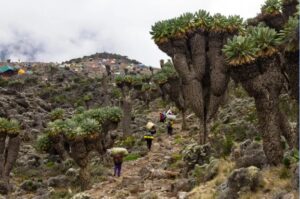
January-February captures Kilimanjaro in peak ecological health following short rains. Rainforest zones display maximum vitality with flowering plants, active wildlife, and cascading seasonal waterfalls. Heath and moorland zones showcase their unique flora—giant groundsels and lobelias—in full vigor. The lower mountain’s vibrant life contrasts dramatically with upper alpine zones, emphasizing the ecological journey central to Kilimanjaro’s appeal.
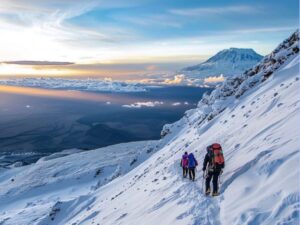
Photography benefits enormously. Occasional fresh snowfall creates pristine white summit landscapes impossible during drier mid-year months. Lower zone greenery provides color contrast. Clear skies dominate for crisp landscapes while occasional dramatic cloud systems add atmospheric interest.
The Crowd Sweet Spot
Post-holiday normalization means January-February sees substantial traffic reduction from December-January peaks while maintaining higher volumes than true shoulder seasons. This creates optimal social dynamics—enough fellow climbers for safety, camaraderie, and shared experience without overwhelming congestion disrupting wilderness atmosphere.
For many climbers, particularly first-timers, this represents ideal timing: warm enough to reduce environmental stressors, stable enough for high success probability (80-85%), beautiful enough for memorable photography, and social enough for international community experience.
The Stability Window: When Reliability Trumps All (July-August)
July-August represents Kilimanjaro’s most predictable period—a meteorological fortress of stability offering unmatched confidence in planning but demanding significant trade-offs.
The Predictability Premium
Weather stability during July-August reaches annual maximums with precipitation probability dropping to 5-10% monthly—effectively guaranteeing dry conditions. Cloud-free days average 24-26 per month at high elevations. This predictability enables confident booking 8-10 months ahead with near-certainty that conditions will support summit attempts.
For climbers whose schedules permit only single attempts without flexibility for weather-related postponement, this reliability justifies the period’s drawbacks. Corporate executives using limited vacation time, once-in-a-lifetime tourists, or those traveling intercontinentally with complex logistics particularly value this certainty.
The Cold Reality
The price for stability is brutal cold. Summit night temperatures regularly reach -20 to -25°C before wind chill factors. Exposed flesh freezes within minutes. Hydration systems freeze solid requiring insulated bottles. Batteries drain rapidly. These conditions aren’t merely uncomfortable—they create genuine hazards for inadequately prepared climbers.
July-August demands comprehensive cold-weather gear: expedition-weight down jackets rated for sub-zero temperatures, insulated pants, multiple glove systems, extreme cold sleeping bags, and chemical warmers for emergency use. This gear investment adds $300-800 to total costs beyond base climbing expenses.
Cold exposure also affects summit success through non-obvious mechanisms. Extreme cold increases caloric expenditure as bodies work to maintain temperature. It reduces manual dexterity, complicating tasks like adjusting layers or accessing food. It creates psychological stress that compounds altitude effects. Climbers who thrive in cold conditions excel during July-August; those who struggle with cold face compounded challenges.
The Crowd Challenge
July-August experiences maximum annual congestion as Northern Hemisphere summer vacations, European holidays, and optimal weather converge. Popular routes like Machame feel crowded—camps at capacity, morning departures resembling parades, and Barranco Wall creating bottlenecks. This crowding doesn’t prevent success but does diminish wilderness character and solitude.
Strategic responses include selecting less-popular routes (Rongai, Northern Circuit), accepting crowds as trade-off for reliability, or targeting very early July or very late August for marginally reduced traffic. The crowds also bring advantages—well-stocked supplies, highly experienced guides working continuously, and robust emergency support infrastructure.
The Balance Window: When Everything Aligns (Late September-October)
Late September through October earns recognition from experienced guides and repeat climbers as potentially the truest best time to climb Kilimanjaro, achieving remarkable balance across competing priorities.
The Goldilocks Phenomenon
This period captures the benefits of extended dry season weather stability while avoiding mid-year extremes. Success rates match July-August at 80-85% through continued dry conditions and clear skies. However, temperatures warm progressively as the sun migrates south toward summer solstice—by October, summit nights average 5-8°C warmer than August, substantially improving comfort and safety margins.
Precipitation probability remains low at 10-15%, comparable to peak mid-year reliability. Clear sky days average 22-24 per month. Weather systems tracking across East Africa create occasional brief afternoon clouds at lower elevations but rarely impact upper mountain conditions or summit attempts.
The Crowd Dividend
The transformative factor distinguishing September-October from July-August is dramatically reduced congestion. As European schools resume and summer holidays end, traffic drops by 30-40% compared to peak months. By mid-October, you might encounter only 2-3 other groups at major camps versus 8-10 during July-August. Trails feel spacious, camps comfortable, and wilderness atmosphere authentic.
This traffic reduction doesn’t compromise infrastructure—guides remain highly experienced, supplies stay well-stocked, and emergency support maintains full readiness. You gain solitude benefits without accepting off-season limitations.
The Value Proposition
Pricing during September-October moderates from peak July-August levels by 10-20% as demand softens. Operators maintain quality service while offering improved value. For budget-conscious climbers seeking optimal conditions, this represents the best compromise—near-peak experiences at shoulder season pricing.
The combination of excellent weather, comfortable temperatures, reduced crowds, and reasonable costs creates compelling appeal. September-October frequently appears on experienced climbers’ recommendation lists as the sophisticated choice—the timing selected by those who’ve researched thoroughly rather than defaulting to conventional peak season wisdom.
The Adventure Window: When Challenge Becomes Reward (April-May)
April-May represents Kilimanjaro’s most challenging period, yet for specific climber profiles, these months offer unique advantages transforming limitations into features.
The Challenge Landscape
Long rains dominate April-May with 40-50% precipitation probability—expect afternoon thunderstorms, muddy trails, and cloud-obscured views. Summit conditions prove particularly difficult with increased snow, reduced visibility, and higher winds. Success rates drop to 50-56%, reflecting genuine difficulty.
Trail conditions deteriorate substantially. Rainforest zones become slippery mud tracks. Moorland zones see saturated ground. Even alpine desert zones, typically arid, experience occasional precipitation. These conditions increase injury risk from slips and falls, slow pace requiring longer trekking days, and test mental fortitude.
The Transformation Through Perspective
Yet properly framed, April-May’s challenges transform into authentic adventure. The question becomes: what defines meaningful achievement? Easy success or triumph over adversity? Comfortable conditions or character-building challenge?
For adventurers viewing mountains as proving grounds rather than theme parks, April-May provides genuine testing unavailable during comfortable peak seasons. Successfully summiting in challenging conditions builds confidence exceeding easy-season achievements. The struggle becomes part of the story—something shared with pride rather than merely endured.
The Tangible Benefits
Beyond philosophical reframing, April-May delivers concrete advantages. Cost savings of 25-40% make Kilimanjaro financially accessible to thousands who couldn’t otherwise afford peak season pricing. A $3,200 climb becomes $2,000-2,400—difference between impossible and achievable for budget-conscious adventurers.
Trail solitude reaches extraordinary levels. Days may pass without encountering other groups. Camps feel private. Guides and porters provide undivided attention. This wilderness authenticity proves increasingly rare in modern adventure tourism—April-May preserves it.
Lower mountain beauty peaks during rainy season. Rainforests explode with life—lush vegetation, dramatic waterfalls, active wildlife, blooming flowers. Photography of these zones reaches optimal quality despite upper mountain challenges. The ecological spectacle partially compensates for summit weather difficulties.
Strategic Success Approaches
April-May success demands strategic modifications: selecting Rongai for its northern rain shadow position (40-50% drier), extending standard itineraries by 1-2 days providing schedule flexibility and better acclimatization, investing in quality waterproof gear with taped seams and dry bags, cultivating mental resilience viewing challenges as adventure rather than obstacles, and choosing operators with extensive rainy season experience.
With these strategies, April-May success rates can reach 65-70% on longer routes—still below peak season but substantially improved from naive approaches. For properly prepared climbers, April-May represents viable timing despite challenges.
The Gambler’s Window: When Timing Becomes Strategic Chess (November)
November occupies a unique position as Kilimanjaro’s most variable month, creating opportunities for strategic, flexible climbers while punishing rigid planning.
The Variability Reality
November weather depends heavily on three factors: timing within the month (early versus late), annual weather pattern variations (some years’ short rains start early, others late), and specific route exposure (northern versus southern). This complexity creates 15-20 percentage point success rate spreads between favorable and unfavorable November scenarios.
Early November (1st-12th) often extends October’s excellent conditions with 75-80% success rates, minimal crowds, and warming temperatures. Mid-November (13th-20th) becomes increasingly uncertain with rising precipitation probability but remains viable. Late November (21st-30th) typically sees established short rains with 55-65% success rates approaching rainy season difficulty.
The Strategic Opportunity
November’s unpredictability creates an asymmetric opportunity for flexible climbers. Those who can monitor extended forecasts and book 4-8 weeks before departure gain substantial advantages—capturing excellent early November weather at 10-20% discounted pricing with minimal competition.
This strategy requires specific capabilities: schedule flexibility permitting relatively short-notice commitments, financial readiness with funds available when conditions look favorable, operator relationships enabling last-minute bookings, and mental comfort with uncertainty and potential plan changes.
The Risk-Reward Calculation
November represents calculated gambling where potential upside (excellent conditions, minimal crowds, moderate pricing) balances against downside risk (challenging weather, reduced success probability). For risk-tolerant climbers with flexible schedules and backup planning, November can deliver exceptional value. For rigid planners or those on once-in-a-lifetime trips, November should be avoided entirely.
Beyond the Calendar: Success Factors Transcending Timing
While identifying optimal timing matters significantly, Kilimanjaro success ultimately depends more on preparation factors transcending seasonal selection.
Physical Preparation Trumps Perfect Timing
A climber with 6 months of dedicated training attempting April-May succeeds more reliably than an untrained climber attempting optimal September. Cardiovascular conditioning, leg strength, downhill technique, and mental resilience matter more than weather forecasts.
Route Selection Multiplies Timing Effects
Longer routes (7-9 days) achieve 15-20 percentage point higher success rates than shorter routes (5-6 days) regardless of season. Northern Circuit in April outperforms Marangu in July. Strategic route selection compensates for or amplifies timing advantages.
Gear Quality Determines Comfort and Safety
Quality cold-weather gear enables successful July-August attempts; inadequate gear causes failure even during warmer January-February. Waterproof gear transforms April-May from impossible to challenging. Equipment investment matters equally to timing investment.
Mental Preparation Separates Summit from Retreat
Summit night tests mental fortitude more than physical capacity. Climbers quit from psychological defeat more commonly than physical inability. Mental preparation through visualization, coping strategy development, and purpose clarification proves crucial regardless of season.
Conclusion
Determining the best time to climb Kilimanjaro requires moving beyond simplistic “dry season good, rainy season bad” generalizations to sophisticated analysis balancing weather reliability, temperature comfort, crowd dynamics, cost implications, and personal capabilities. The data identifies late January through mid-February and late September through early October as statistically optimal periods, achieving 80-85% success rates while balancing competing priorities effectively.
However, optimal timing remains fundamentally personal and contextual. The budget-constrained student finds April the best time despite challenges. The teacher, bound by the school calendar, finds July optimal despite the cold and crowds. The experienced adventurer seeking authentic wilderness finds November compelling despite uncertainty. The comfort-prioritizing first-timer finds February ideal despite moderate pricing premiums.
What ultimately determines Kilimanjaro success transcends calendar selection—comprehensive physical preparation, strategic route selection, quality equipment, adequate acclimatization time, and unwavering mental determination matter more than perfectly timed departures. Climbers summit successfully during every month because these factors overcome seasonal disadvantages.
Strategic timing optimizes probability and experience quality—important advantages deserving thoughtful analysis. Yet timing represents just one variable in the success equation, and not the dominant one. A well-prepared climber choosing less-than-optimal timing succeeds more reliably than a poorly prepared climber choosing perfect timing.
Your best time to climb Kilimanjaro emerges from honest assessment of personal priorities, realistic evaluation of capabilities and constraints, strategic matching between seasonal characteristics and individual circumstances, and confident commitment to comprehensive preparation regardless of chosen timing. The mountain rewards determination, preparation, and strategic thinking—whether you stand at Uhuru Peak in February’s warmth or October’s clarity, in April’s solitary beauty or August’s stable cold, the achievement will be equally profound and the memories equally transformative.
Choose thoughtfully, prepare comprehensively, and approach your selected season with confidence. Kilimanjaro’s magnificence transcends weather patterns—your story begins not with perfect timing but with the decision to go.
Key Takeaways
- Comfort Versus Stability Trade-Off Defines Prime Seasons: January-February offers 5-10°C warmer temperatures; July-August provides maximum weather predictability—choose based on cold tolerance and risk preference
- Late September-October Achieves Optimal Balance: Combines excellent weather (80-85% success) with 30-40% fewer crowds than peak season and warming temperatures—sophisticated timing choice
- April-May Transforms Limitations Into Budget Accessibility: 25-40% cost savings create opportunity for budget-constrained climbers willing to accept 50-56% success rates and challenging conditions
- November Rewards Strategic Flexibility: Early month often excellent (75-80% success) with minimal crowds and moderate pricing for climbers capable of monitoring forecasts and booking short-notice
- Temperature Differentials Create Qualitative Experience Differences: 10°C variation between seasons affects not just comfort but safety margins, gear requirements, and psychological stress significantly
- Crowd Dynamics Vary 400% Between Peak and Off-Seasons: July-August sees 8-10 groups per major camp versus 2-3 in October or 0-1 in April—profoundly affects wilderness experience character
- Route-Timing Combinations Enable Strategic Optimization: Rongai during April-May achieves better results than Machame during same period; Northern Circuit in any optimal season maximizes success
- Success Rate Spreads Exceed 35 Percentage Points: Peak seasons achieve 80-85% versus 50% in heavy rains—timing directly influences achievement probability but doesn’t determine it
- Personal Priorities Should Drive Decision Over Statistics: Budget constraints, schedule inflexibility, experience level, cold tolerance, and crowd preference determine individualized “best” timing
- Preparation Factors Transcend Timing Effects: 6 months training in April succeeds more reliably than 2 months training in September—preparation ultimately matters more than perfect calendar selection
Frequently Asked Questions
What percentage of climbers actually succeed during “bad” seasons versus “good” seasons?
Success rate differentials are substantial but not absolute barriers. During optimal seasons (late January-February, late September-October), approximately 80-85% of climbers reach Uhuru Peak, with rates climbing to 90-95% on longer routes like Lemosho and Northern Circuit. During challenging rainy seasons (April-May), overall success rates drop to 50-56%, though longer routes still achieve 65-70%. November averages 67-74% with significant variation (early month 75-80%, late month 55-65%). These statistics mean thousands successfully summit during “bad” seasons annually—challenging conditions reduce probability but don’t prevent achievement. Strategic preparation, route selection, and extended duration substantially improve odds even during difficult periods.
How much money do I actually save climbing during rainy season?
Rainy season discounts typically range 25-40% below peak season pricing for equivalent trips. Specific examples: a standard 7-day Machame trek costing $3,200 during July-August might cost $2,000-2,400 during April-May (saving $800-1,200). An 8-day Lemosho priced at $4,000 in January-February might cost $2,600-3,000 in April-May (saving $1,000-1,400). These substantial savings transform Kilimanjaro from financially prohibitive to accessible for budget-conscious climbers. Additional savings accrue through lower accommodation costs, reduced flight prices during off-season, and potentially shorter booking windows eliminating advance purchase requirements. For many climbers, April-May represents not an inferior choice but the only financially viable option—making it definitively the best time to climb Kilimanjaro for their circumstances.
If I’m physically very fit, can I succeed during any season?
Physical fitness significantly improves success probability regardless of season but doesn’t eliminate timing effects entirely. Extremely fit climbers achieve perhaps 10-15 percentage point advantages over average-fitness counterparts—meaning exceptionally fit climbers might reach 65-70% success during April-May versus 50-56% average, or 90-95% during optimal seasons versus 80-85% average. However, weather still affects even elite athletes—torrential rain, extreme cold, or dangerous summit conditions can force retreat regardless of fitness. Fitness advantages prove most valuable during marginal conditions where physical reserves enable pushing through challenges. During extreme conditions, weather determines outcomes more than fitness. The optimal strategy combines fitness advantages with favorable timing rather than relying on fitness to overcome poor timing.
Will climate change make traditional “best times” obsolete?
Climate change gradually affects Kilimanjaro’s seasonal patterns, though traditional optimal periods remain reliable currently. Observable changes include: long rains (April-May) sometimes ending earlier or arriving later, short rains (November) becoming more variable in onset timing, extreme weather events (severe storms, unusual cold snaps) occurring with marginally increased frequency, and overall temperature creeping upward by 0.5-1°C over recent decades. These changes add modest unpredictability but haven’t fundamentally altered which periods represent the best time to climb Kilimanjaro. January-March and June-October remain statistically optimal. The primary climate impact affects Kilimanjaro’s glaciers, retreating rapidly and projected to disappear within 10-20 years—adding urgency to climb sooner rather than later, regardless of seasonal selection. Maintain flexibility and contingency planning regardless of chosen timing.
Can first-timers really handle rainy season conditions, or is experience essential?
Rainy season success doesn’t require extensive experience but does demand realistic expectations, comprehensive preparation, and specific personality traits. Essential characteristics for first-timer rainy season success: Above-average fitness compensating for slower muddy trails, quality waterproof gear investment, mental resilience viewing challenges as adventure rather than obstacles, flexibility accepting reduced summit probability (50-56% versus 80-85% optimal seasons), and choosing operators with extensive rainy season expertise. Recommended strategies: Select Rongai for drier conditions, choose 8-9 day itineraries providing maximum acclimatization and schedule flexibility, invest in comprehensive rain gear including multiple clothing sets for rotation, and cultivate adventure mindset embracing discomfort. First-timers can succeed during rainy season—thousands do annually—but should approach it as conscious choice accepting trade-offs rather than naive budget decision.
How do I balance timing recommendations with safari or other Tanzania attractions?
Combining Kilimanjaro with safari or beach extensions significantly affects optimal timing. For wildlife viewing: June-October represents Tanzania’s premier safari season with Great Migration in Serengeti (July-October), animals concentrated around water sources, and dry conditions enabling excellent game viewing. If safari equals Kilimanjaro in priority, target late September-October combining excellent climbing conditions with peak safari experiences. For beach relaxation: Zanzibar’s best weather aligns with dry seasons (June-October, January-March), making these periods optimal for combined trips. For budget combinations: April-May offers discounted rates across all tourism sectors—climb, safari, and beach—though safari quality diminishes substantially during rains. Strategic approach: If Kilimanjaro is primary focus, choose optimal climbing timing and adjust safari/beach expectations to match. If equally prioritizing multiple components, late September-October delivers best overall balance despite compromising absolute optimal timing for individual activities.
Should I book the first available optimal season date or be selective within the season?
Selectivity within optimal seasons provides meaningful advantages. Within January-March: Target mid-January through mid-February as sweet spot avoiding holiday crowds and late-March transitional uncertainty. Within June-October: Target late September through early-mid October balancing excellent conditions with diminishing crowds and warming temperatures. Avoid mid-July through mid-August unless crowds don’t concern you. Within shoulder seasons: Early November offers best risk-reward balance; late March becomes increasingly risky. General principle: Middle periods within optimal seasons often provide best experiences—conditions fully stabilize while crowds haven’t peaked or haven’t yet dissipated. Very early season catches transitional effects; very late season faces approaching transitional uncertainty. Build 1-2 week buffers from season edges when possible.
What if I can only take time off during December holidays—is it worth the crowds and cost?
December holiday period (December 20-January 5) presents mixed value proposition requiring honest assessment. Disadvantages: Maximum annual crowds creating camp congestion, premium pricing (15-25% above standard rates), booking challenges requiring 10-12 month advance reservations, reduced wilderness atmosphere. Advantages: Generally excellent weather with clear skies and moderate temperatures, full infrastructure operation, vibrant international community, and for many climbers, the only viable scheduling window. Value assessment: If holidays represent your only available window due to work/school constraints, it’s absolutely worth doing—many successful, satisfied climbers summit during holidays despite crowds and costs. The achievement and experience remain transformative regardless of timing. However, if schedule-flexible, targeting immediately after holidays (January 6-15) captures excellent weather as crowds dissipate and pricing normalizes—potentially better value without compromising experience quality.
How important is booking timing versus calendar timing?
Booking timing matters substantially though differently than calendar timing. Peak seasons (July-August, December-January): Book 8-10 months ahead as quality operators fill early, pricing may increase closer to departure, and popular routes reach capacity. Late booking during peak season often means settling for less-preferred operators or dates. Optimal shoulder seasons (February, September-October): Book 5-6 months ahead balancing availability with advance commitment—sufficient time to secure preferred operators without excessive early commitment. Marginal seasons (November, March): Book 2-4 months ahead enabling weather monitoring while securing availability—particularly important for November where forecast visibility guides commitment. Rainy season (April-May): Book 1-2 months ahead or even last-minute as low demand ensures abundant availability—short booking windows enable long-range forecast monitoring. Early booking secures best operators during peak seasons; delayed booking enables strategic opportunism during uncertain seasons.
Does the “best time” differ for summit success versus overall experience?
Sometimes substantially. For maximum summit probability: July-August and late January-February achieve highest success rates (80-85%) through weather stability—prioritize these if achievement matters above all else. For optimal overall experience: Late September-October and early-mid February balance excellent summit probability with superior experiential factors (comfortable temperatures, moderate crowds, reasonable pricing, beautiful landscapes). For character-building adventure: April-May and November challenge climbers creating memorable struggles and authentic wilderness experiences despite reduced summit probability. For budget-maximized value: April-May delivers substantial cost savings transforming Kilimanjaro from unaffordable to accessible. The best time to climb Kilimanjaro depends on whether you prioritize achievement certainty, experience quality, adventure authenticity, or financial accessibility—each priority suggests different optimal timing.
What happens to porter welfare during different seasons—should ethics influence timing?
Porter welfare considerations remain important across all seasons with some seasonal variations. Rainy season challenges: Porters carry heavier loads (wet tents and gear absorb water), navigate muddy slippery trails increasing injury risk, and work in cold wet conditions more physically demanding than dry season. However, rainy season also provides essential employment during otherwise slow periods—completely avoiding rainy season could reduce porter income opportunities. Peak season advantages: Full employment, experienced crews, and robust support infrastructure benefit porters through consistent work and established rhythms. However, congestion can mean rushed conditions and maximum workload intensity. Ethical approach: Choose KPAP-certified operators maintaining welfare standards regardless of season, tip generously (especially during challenging rainy season), and select longer routes providing more reasonable daily distances. Ethical porter treatment remains possible and essential during all seasons—operator selection matters more than timing for porter welfare.